Industrial grade AI design landing in the automotive industry - Dongfeng Lantu collaborates with Dajie Intelligent to create a new model of collaborative automotive development
- Release time: December 2, 2025
- Source: Company News
1、 Position of mould in national economy
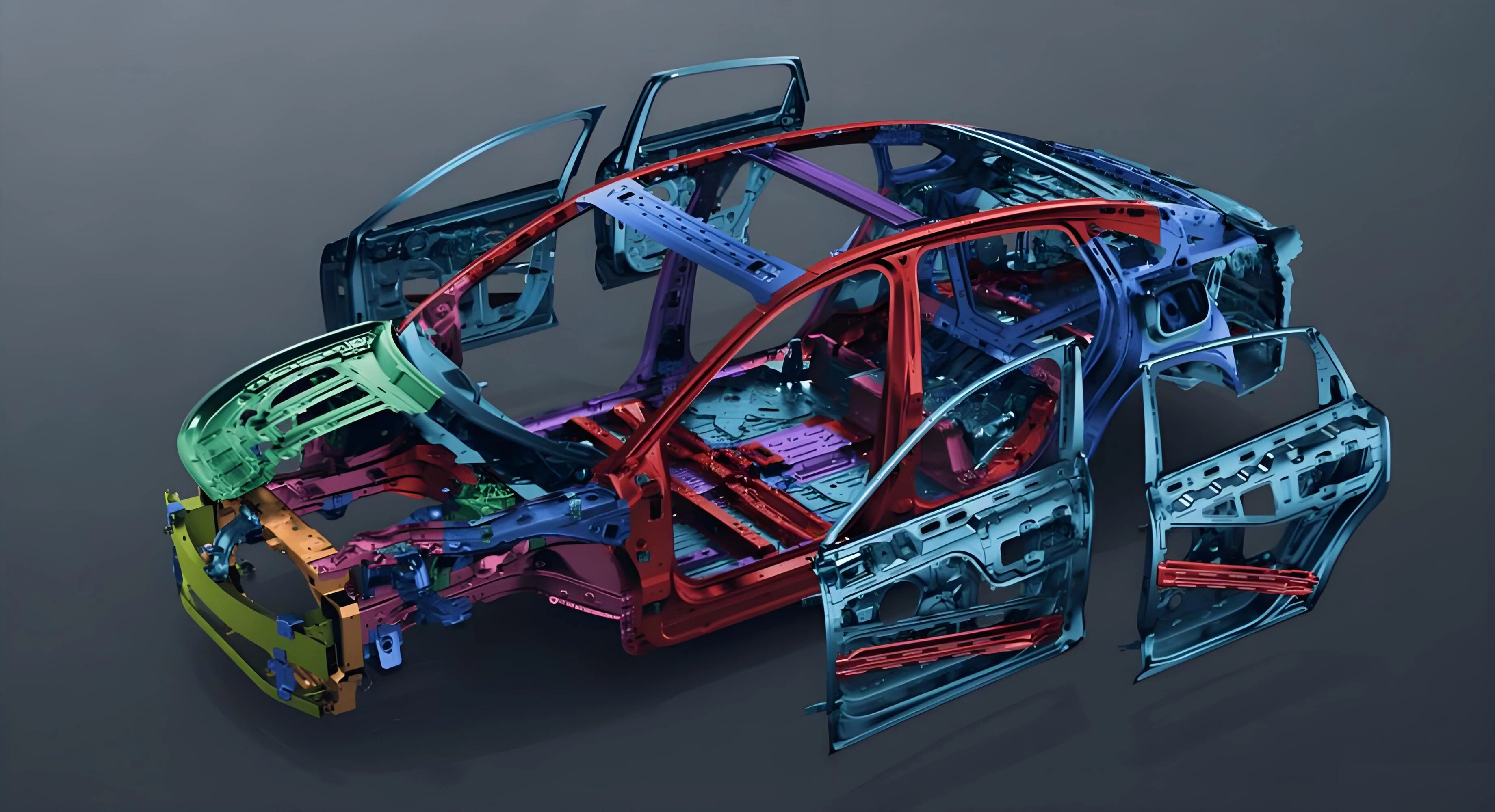
The mold is called "; Mother of Industry "; In strategic industries such as automobile manufacturing, electronic information, and high-end equipment, molds are an efficient production process equipment. 60% -80% of precision components rely on mold forming, which can achieve high-speed mass production and ensure stable product quality in large-scale production. Molds include stamping molds, injection molds, die-casting molds, forging molds, and other types. Stamping molds play an important role in the mold manufacturing industry, accounting for over 40%, especially in the automotive industry. According to relevant statistics, more than 95% of the components in automotive production need to be formed by molds. An ordinary sedan requires approximately 1000 to 1500 sets of stamping molds for the production of body parts, chassis parts, and interior parts.
2、 Development status of mold industry
In the past decade, China's mold technology has made a qualitative leap, and the mold industry has grown from small to large, rapidly rising to become a global mold manufacturing power. Especially with the development of China's automotive industry, independent brands are entering the mid to high end, and the rise of new energy vehicles has put forward new demands for us. According to statistics from the China Mold Industry Association, China has become the largest country in mold manufacturing and consumption. The mold industry in China has formed a huge industrial cluster with an annual output value of 400 billion yuan, supporting the operation of the world's largest manufacturing system. Its technological level directly affects the competitiveness of the country's high-end manufacturing capabilities.
3、 Problems in the Development of China's Mold Industry
However, China's mold industry still faces challenges; Big but not strong; Structural contradictions. The problems of long mold development cycle, high design cost, and low standardization level have become bottlenecks for industrial upgrading. Mainly manifested in:
1. The core technology of mold development is controlled by foreign countries
In recent years, the rapid development of China's economy, especially the automotive industry, has also promoted unprecedented investment in the mold industry. The mold processing and manufacturing capabilities have an absolute advantage in both quantity and quality in the world. The software tools that mold design relies on, such as CAD, CAE, and CAM systems, are almost monopolized by foreign countries. The seemingly powerful mold industry in our country actually has very limited profit margins, which is seriously mismatched with the high-tech intensive industry status of the "mother of industry".
2. The mold development model is not suitable for the development of digitalization
Mold is a typical order driven single piece production mode, which relies heavily on experience, manifested in the dependence of mold design on engineer experience, requiring design engineers to spend a lot of time using industrial software for analysis and modeling work; Mold debugging relies on the experience of fitters, with high labor intensity and a serious imbalance with the requirements of digitization. With the rise of AI technology, there is an urgent need for AI methods to solve the two major bottleneck technical problems that have been left over from the development of the mold industry.
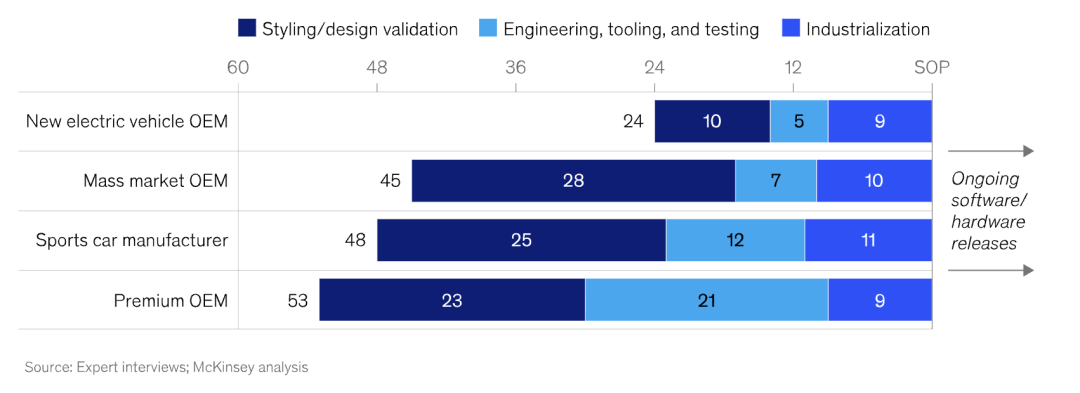
3. The iteration of vehicle models is accelerating, and mold development has become a bottleneck
Under the background of electrification and intelligence industries, the "brain" of automobiles also follows Moore's Law of evolution, shifting from "fixed mechanical products" to "evolving electronic mechanical complexes". Car companies have to frequently launch new models in order to seize the market, and short-term research and development of vehicle models has entered a normalized mode. At the same time, electrification simplifies the power system and chassis system, and the body, especially the exterior panels, becomes the core carrier for conveying the brand concept and product differentiation positioning of car companies. The body and tooling molds become the "bottleneck" links in the short cycle development of the entire vehicle.
4、 The transformation brought by AI design of automotive molds to the industry
1. AI mold design, solving technical problems that rely on industry experience
Through breakthroughs in core technologies such as building a knowledge database, constructing industry AI models, and intelligent design algorithms, we aim to develop a new generation of professional intelligent design systems based on data and knowledge driven approaches for the mold industry. This system achieves the intelligence of stamping processes and mold structure design processes, freeing us from the industry's common reliance on experience.
2.Accelerate the cultivation of mold professionals and reduce the risk of a talent gap in the industry design
By adopting an intelligent design system, the difficulty of mold design is reduced, and the design operation process is more convenient to understand the structure of the mold. Previously, it took at least 2-3 years to cultivate a basic qualified mold design engineer. Through the use of an intelligent design system, engineers can start designing complex mold structures after 1-2 months of learning.
3. Greatly reduce the operational intensity of mold design software and liberate engineers
Designing a set of molds includes hundreds of components, and engineers need to complete over 400000 CAD software operations. Engineers who have been engaged in mold design work for a long time are prone to shoulder periarthritis and cervical spondylosis, and mold companies are often troubled by personnel turnover. A large amount of CAD modeling operations in intelligent design systems are automatically completed by the system. Engineers only need to select design goals and fill in specification parameters, eliminating the modeling process of points, lines, surfaces, and bodies that is usually done in 3D CAD design. Even non-standard structures can be automatically completed by the system, greatly reducing the workload of design engineers and making design easier.
4. Intelligent mold design system improves the quality and efficiency of mold development process
The design process of molds is extremely critical because they are developed and produced as a single piece. Taking automotive mold development as an example, mold design includes two stages: process design and structural design. Normally, these two stages should be sequential, and structural design can only be carried out after the process design is completed. Moreover, each stage must be reviewed and approved by the mold developer and the automotive OEM. Due to the long mold design cycle, in order to shorten the entire development cycle, the industry generally starts the structural design early before the final review and approval of the process design. Once the process is changed, it will cause corresponding modifications to the mold structure design, resulting in a large amount of wasted design work. According to incomplete statistics, the ineffective waste work caused by mold changes reaches 30% -40%. This not only increases the development cost of molds, but also dampens the enthusiasm of structural design engineers.
In addition, as an automotive OEM, it is necessary to undertake the task of reviewing and signing off on the development of molds, which can prolong the development cycle when the review experts are nervous. The intelligent design system embeds the standard requirements of automotive OEMs into the software system, resulting in more stable design quality and greater reliability than manual audits. It gradually reduces the review and signing time for automotive OEMs, thereby shortening the mold development cycle to a greater extent.
5、 Multi party collaboration to jointly promote the development of intelligent technology in the industry
The current intensification of electrification and intelligence has intensified competition in the automotive industry. As a high-end smart new energy brand created by Dongfeng Motor, Dongfeng Lantu has extremely high technological sensitivity and is accelerating its intelligent layout in all fields such as research and development, manufacturing, products, and talent. Dajie Intelligent has gained high recognition from the customer for its independently developed platform based intelligent design technology and team's professional foundation in the field of vehicle body research and development for more than 20 years. Its technical capabilities in intelligent design core algorithms, software development, and other aspects have made it a partner in the field of equipment intelligent design. It has joined forces with major mold leading enterprises to carry out in-depth cooperation in the intelligent design of vehicle body equipment.
Dongfeng Lantu fully leverages the platform and ecological advantages of its host factory, fully opens up mold design and development scenarios, and transforms the Know How accumulated from years of actual automotive equipment development into design standards, providing application soil for the landing of intelligent design technology. As the owner of the industrial chain, I lead the application practice of intelligent design with partners within the supply chain, drive rapid iteration of the system, promote the rapid landing of AI technology in the industry, and leverage its technological leadership in the industry.
Agile IntelligentAs a technology-based enterprise with expertise in AI algorithms, software development, and years of accumulation in the automotive equipment industry, we have made breakthroughs in key technologies such as industrial grade decision-making algorithms and professional AI model construction technology, process to structural design knowledge graph construction, intelligent design technology driven by process structures, standardized and non-standard geometric AI generation, and have achieved platformization in recent years. The team has the ability to develop large-scale industrial grade AI design systems and tackle core technology challenges, meeting the demand for rapid delivery and iteration in the current market environment.
This collaboration involves multiple leading mold companies, represented by Dongfeng Die Punch, as the direct application party of intelligent design, which plays a crucial role in the rapid engineering iteration of the system. Mold companies continuously apply systems and identify problems based on actual vehicle mold development projects, and provide constructive optimization feedback to the system R&D end to form an effective closed loop of AI design empowering business efficiency and accelerating system optimization through practical design.
By building a multi-party collaborative innovation system, we can achieve complementary advantages in platform, research and development, and application, forming an organic cycle from standard setting, technology research and development, practical application, and system optimization. Breaking the dilemma of "increasingly unstable data, higher requirements, and shorter cycles" in the industry, we are working together to promote industrial technological innovation and achieve sustained improvement in the core competitiveness of all parties.
Scan the code to follow us

Intelligent Design Expert
Embark on a new era of intelligent design
Explanation: Some of the content and images in this article are sourced from the internet. Sharing this article is for the purpose of conveying information. If there are any errors or infringements in the source labeling, please leave a message in the background to contact us. If the situation is true, we will delete it as soon as possible.
Source: Dajie Intelligent
Editor: Zhang Shaoyou
Proofreading: Yi Jianye
- Previous: Intelligent design successfully landed in the home appliance industry - Hisense joins hands with Dajie Intelligence to create a benchmark for intelligent design in the home appliance industry
- Next article: Collaboration between schools and enterprises to jointly cultivate new talents in AI design for the equipment industry